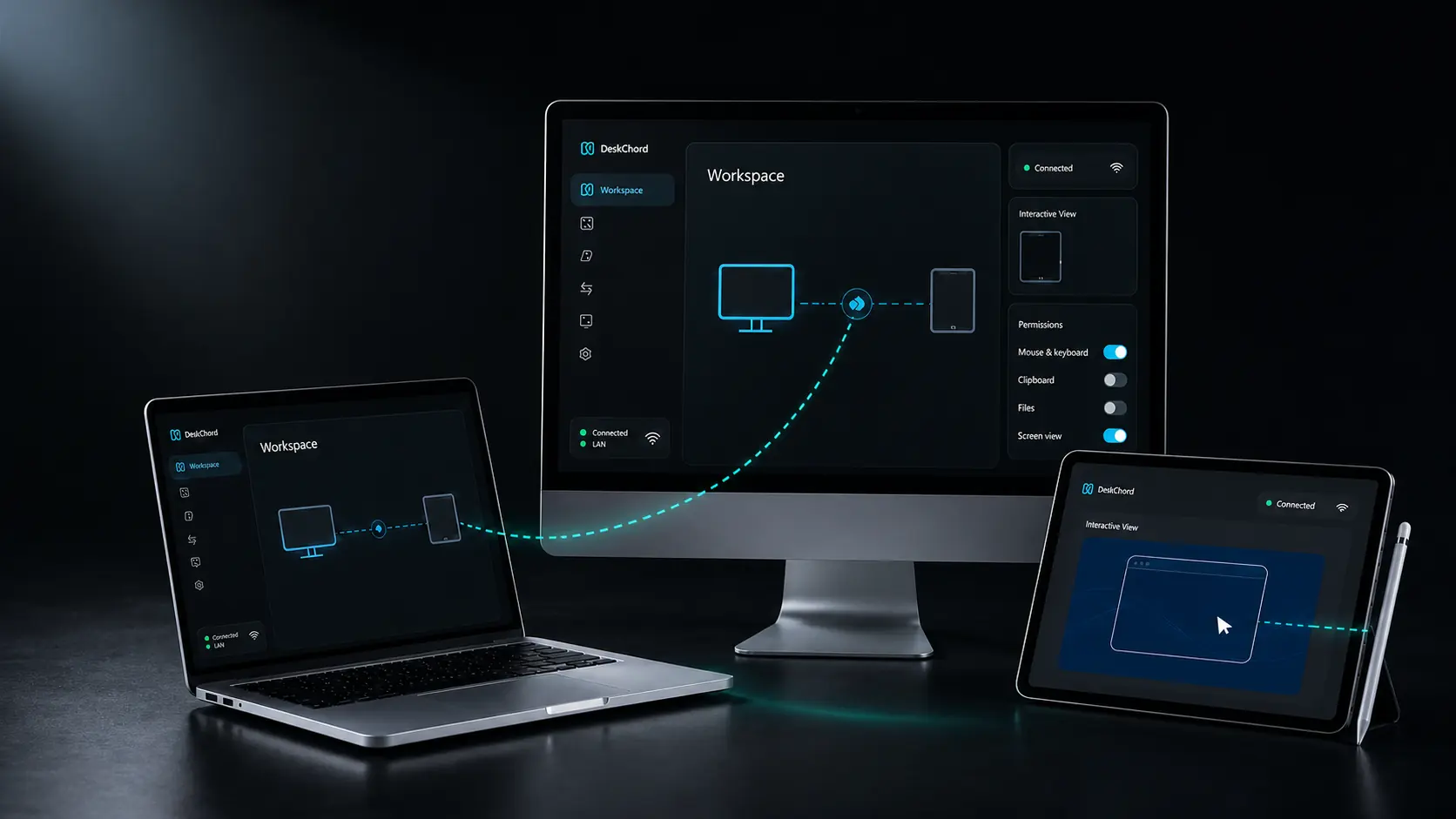
DeskChord app shown across a Windows laptop, desktop monitor, and Android tablet during a local cursor handoff
One local workspace

PRIVATE LAN / WINDOWS + ANDROID

One desk. Every device.

DeskChord turns the Windows PC, Android tablet and monitor already in front of you into one deliberate workspace. Pair directly over the LAN, place the real topology, then grant only the capability you need.

Direct private LAN path. Every capability starts denied.

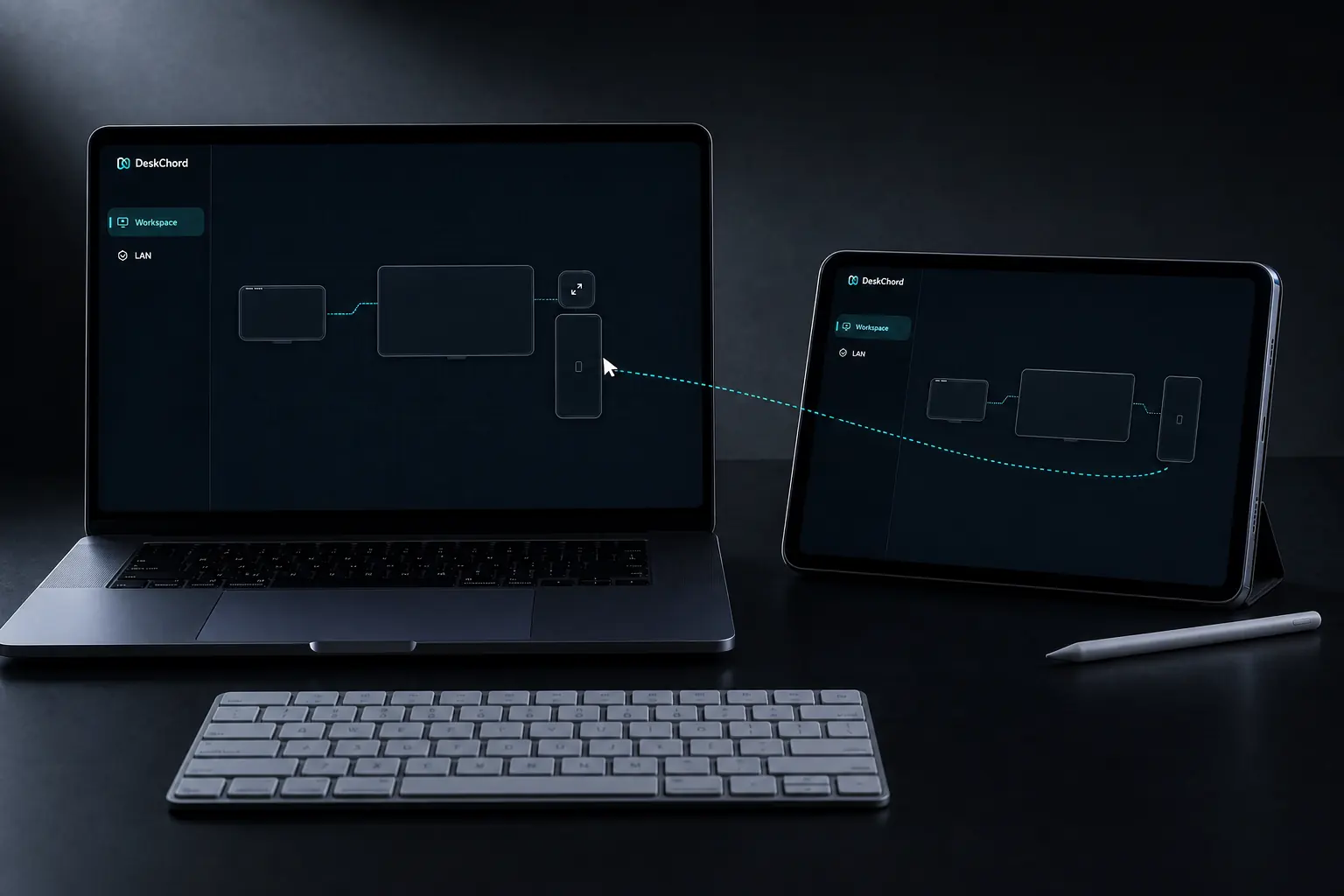
DeskChord cursor crossing from a Windows laptop to an Android tablet over a local connection
The cursor crosses the shared edge
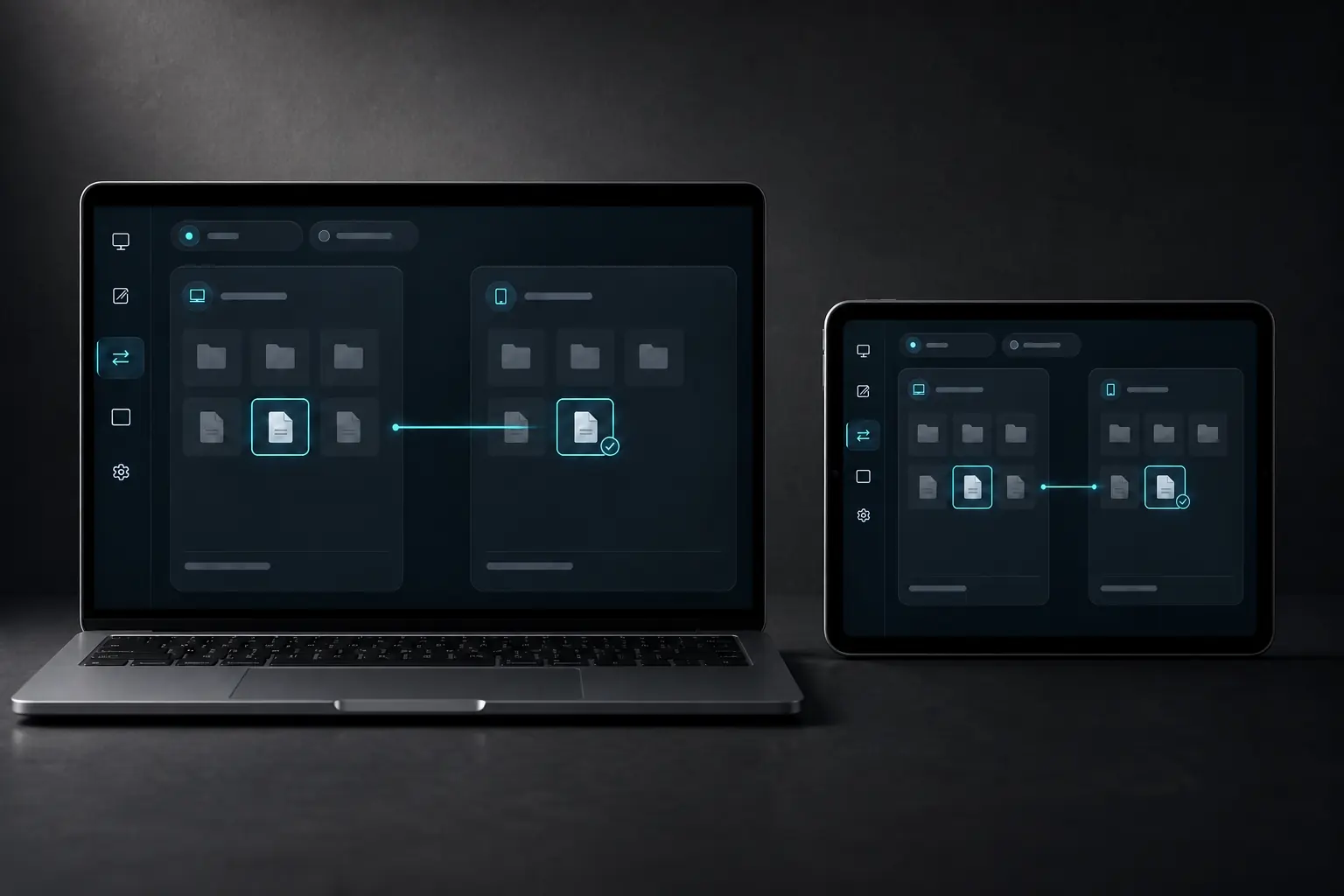
DeskChord copies one selected document from a Windows laptop to an Android tablet with local verification
A selected file travels across the local path
DeskChord screen view on an Android tablet with optional touch control from a Windows display
A Windows screen on an Android tablet
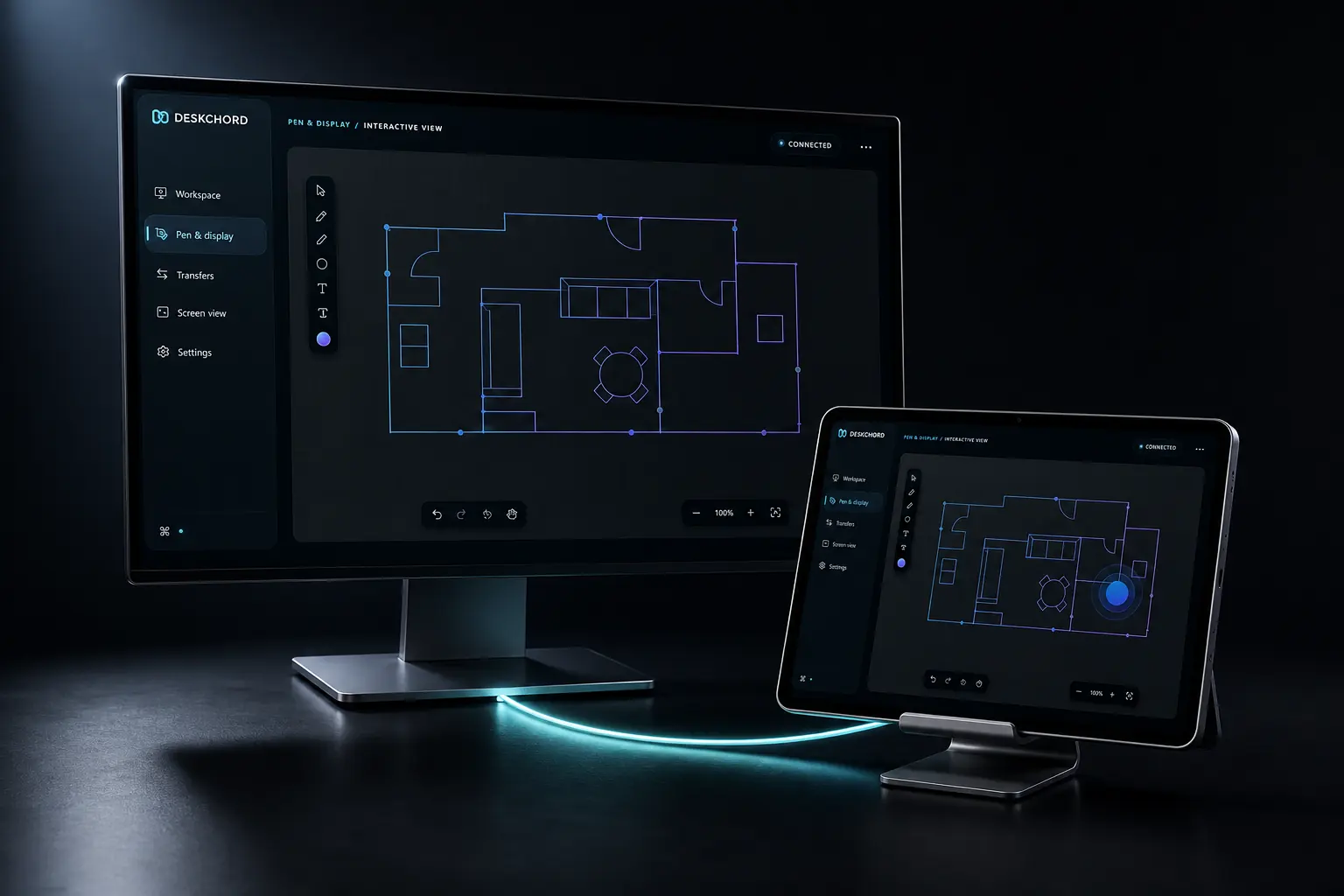
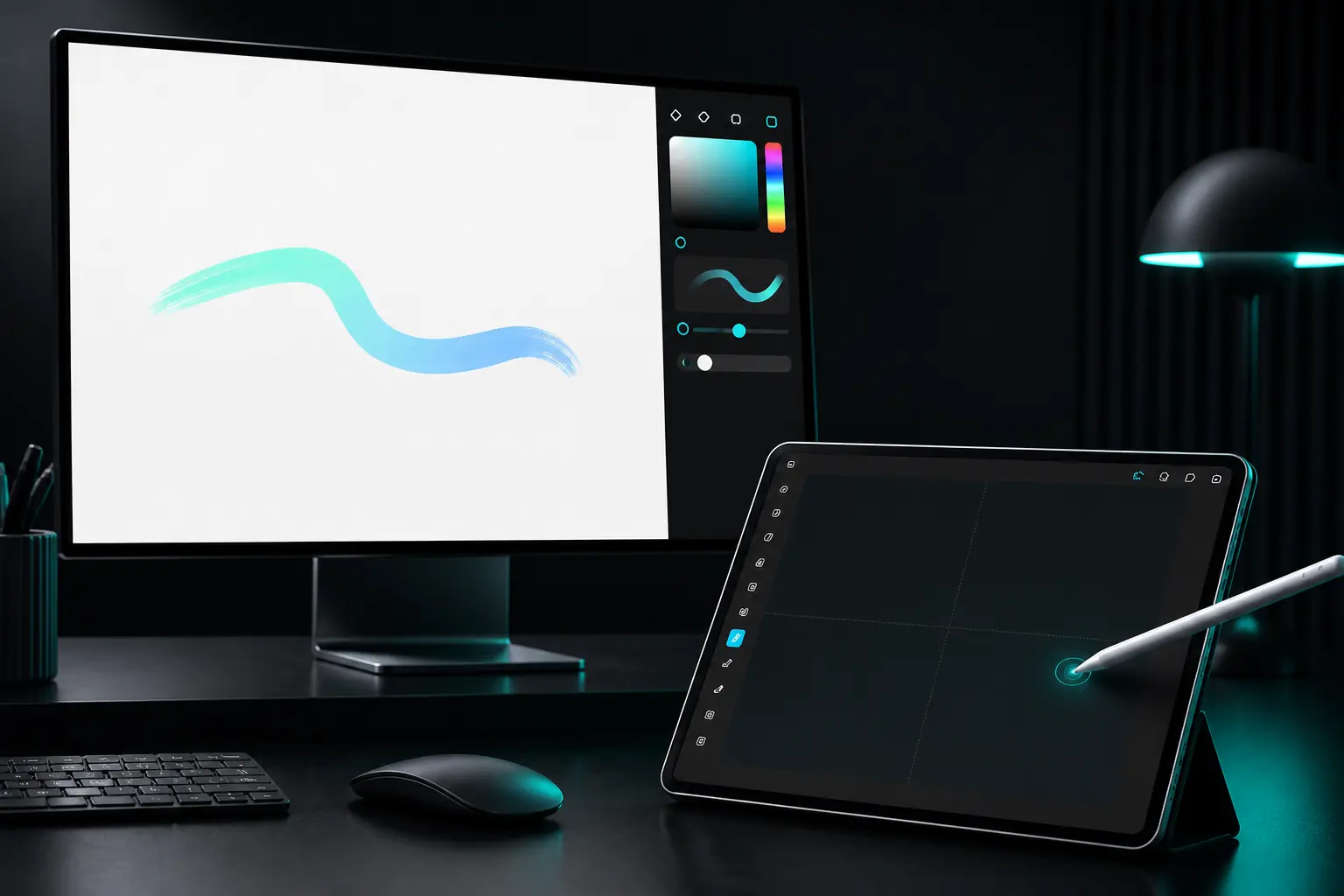
DeskChord pen input from an Android tablet stylus controlling an active Windows canvas
The tablet pen becomes Windows input

01 / STORY

A cursor that respects the desk.

Place physical screens and Android rectangles in one shared workspace. A monotonic owner revision is synchronised between peers; only accepted, unambiguous edges can become a handoff route.

  • Cursor input and keyboard input are part of the input grant, separate from every other capability.
  • Pairing confirms identity with a SAS code, then the session uses pinned mutual TLS over the direct LAN.
  • The receiver issues an exclusive 30-second lease; renewal, disconnect or revoke releases remote input and returns control locally.
Explore the capability

02 / STORY

Move copies. Keep the source.

The Files lane copies selected documents or bounded folder trees through system pickers. On Windows you can also drop a file from Explorer into the visible transfer shelf; direct Explorer-to-Explorer drag is intentionally unsupported. Remote Files can expose a read-only, user-selected SAF/Windows export; each access still needs the Files grant and an authenticated session.

  • Copy-only delivery validates paths, reparse points, names, size, disk space, per-chunk and final SHA-256 before atomic placement.
  • Android sends and receives through user-selected SAF pickers; Android drag/drop is unsupported.
  • Bounded clipboard is Unicode text only, never a background history or file lane. Sources are never deleted and received files never auto-open; unsupported targets are rejected.
Explore the capability

03 / STORY

One selected view, with no hidden audio path.

Interactive View captures a visible Windows app or existing display with the native graphics pipeline and presents it on Android. Enable touch for this session only when the peer has the Input grant; stylus remains a separate Pen Tablet path.

  • Screen View is independent from Input; touch is a per-session opt-in gated by Input, while Pen Tablet uses the Stylus grant.
  • The viewer sends no microphone, system audio or remote audio device.
  • Wireless extended display is not available until a separately signed IDD is installed and validated.
Explore the capability

04 / STORY

A tablet surface for the pen in your hand.

Pen Tablet maps a foreground Android stylus surface to a selected Windows work area. It carries pen and eraser events, not a video of the desktop, and does not need a display driver.

  • Stylus permission and its receiver lease are independent from mouse, touch and screen view.
  • The stylus lease lasts two minutes and is renewed at 90 seconds while the foreground route remains valid.
  • The native path retains pen attributes; JavaScript is not a raw pressure or device bridge.
Explore the capability

CAPABILITY MAP

One clear permission for each path.

The workspace stays understandable because every capability is explicit, local, and bounded.

01Input controlIndependent grant; denied by default.
02StylusIndependent grant; denied by default.
03Screen viewSelected display only; protected surfaces may refuse capture.
04Virtual displayUnavailable until signed IDD support is available.
05Clipboard textIndependent grant; copy only what you choose.
06Selected filesCopy-only, verified, never auto-opened.
07Typed terminalValidation pending; no generic execute endpoint.
08Remote devicesValidation pending; each peer capability is independently authorized.
Remote devices
Validation pending
Virtual display
Unavailable until signed IDD
Readiness
Checked per device and build

FIRST RUN

Pair. Place. Choose.

Three deliberate moves take you from a trusted device to a focused workspace.

  1. 01

    Connect devices

    Open DeskChord on Windows and Android on the same private LAN.

  2. 02

    Confirm identity

    Compare the code on both screens and trust only the device you recognise.

  3. 03

    Place and choose

    Set screen edges, then approve only the capability you need.

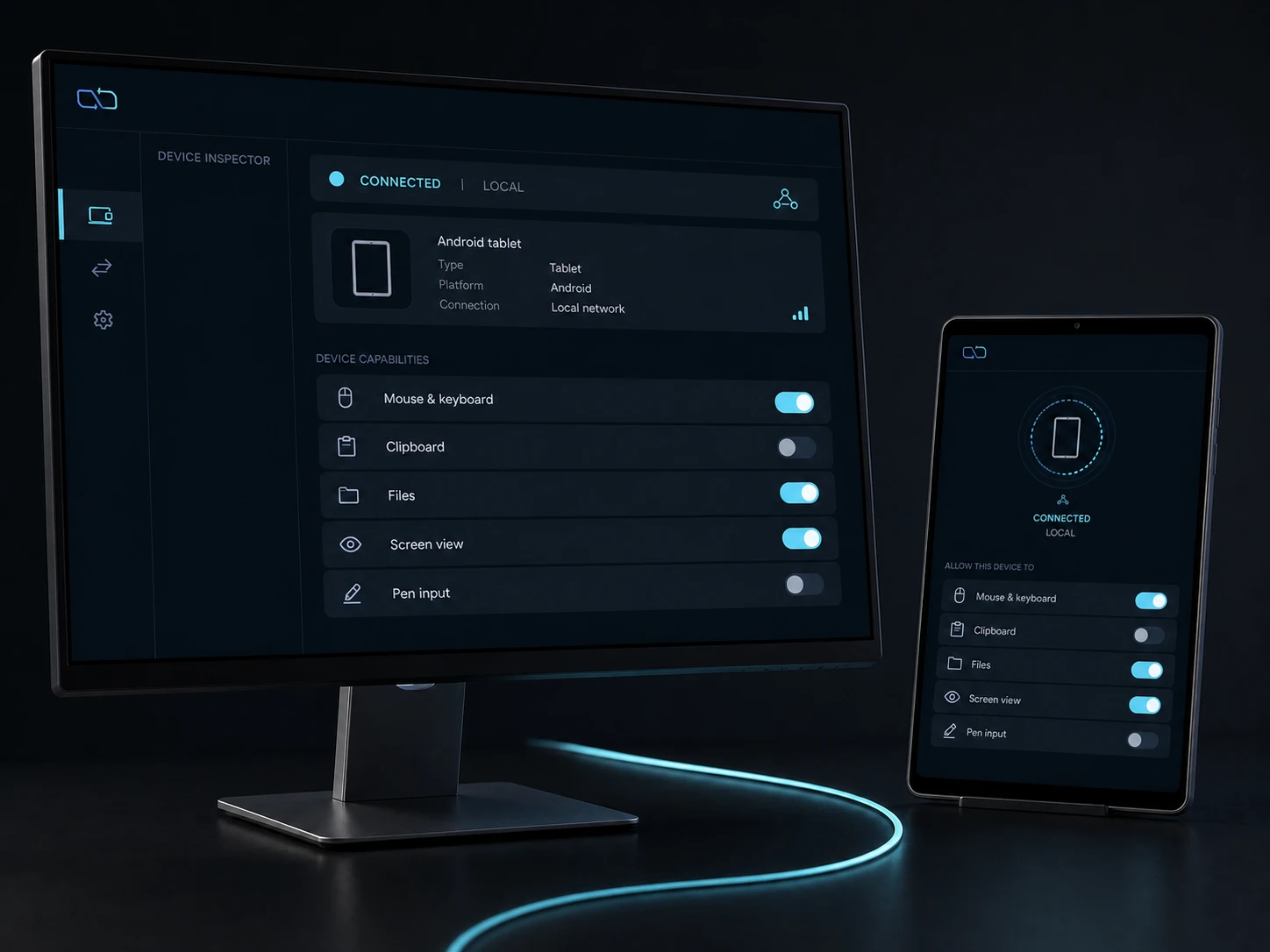
DeskChord permission controls showing independent local access for cursor, files, pen, and screen view
Every capability has its own permission

TRUST INTERLUDE

Local by default. Specific by design.

Workspace traffic stays between trusted peers on your private LAN. Input, Stylus, clipboard, files, terminal, screen view, virtual display and Remote Devices are independently authorized and denied by default.

Windows
Current user session only
Files
Copy-only, verified, never auto-opened
Network
Direct private LAN path
Read the boundaries

DESKCHORD PRO

A lifetime model, explained clearly.

Pro is a lifetime licence with no subscription. Availability is checked before any purchase flow opens.

Compare Free and Pro

FAQ

Clear answers before you install.

Which eight grants does DeskChord separate?

Input, stylus, screen view, virtual display, clipboard, files, terminal and Remote Devices. Pairing establishes peer identity only; every grant starts denied and can be revoked independently.

What does each input lease protect?

Cursor and keyboard use an exclusive 30-second Input lease. Pen Tablet uses a separate two-minute Stylus lease renewed at 90 seconds. Timeout, mismatch, disconnect or revoke releases remote state rather than guessing.

Does Interactive View send audio?

No. It is video with optional touch for the current session after the Input grant is present. Pen Tablet is the separate Stylus route; DeskChord does not capture microphone/system audio or create a remote audio device.

Is the wireless extended display ready?

No. The virtual-display source exists, but operation stays unavailable until the signed IDD package is installed, attested and validated on the target Windows machine.

DESKCHORD

One desk. Every device.

Start with the local path you already trust.

Check availability